🇺🇸 Trump’s 15% Global Tariff: A Bold Counter-Attack After Supreme Court Setback
Washington D.C. | Feb 22, 2026 — In a weekend that has redefined global economics, President Donald Trump has unleashed a massive 15% global import tariff, bypassing a major legal hurdle from the U.S. Supreme Court. This “Plan B” has sent stock markets into a tailspin and put world leaders on high alert.
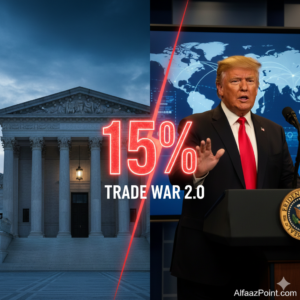
⚖️ The Judicial Showdown: Supreme Court Strikes, Trump Hits Back
The drama began when the U.S. Supreme Court ruled 6-3 that Trump’s previous use of the IEEPA Act of 1977 was unconstitutional for broad, peacetime tariffs. Chief Justice John Roberts stated that the power to tax belongs to Congress, not the President.
Hours later, a furious President Trump responded, calling the ruling “a disgrace to the nation.” Refusing to back down, he immediately invoked Section 122 of the Trade Act of 1974, a different legal authority that allows for a temporary 150-day import surcharge to protect the American economy.
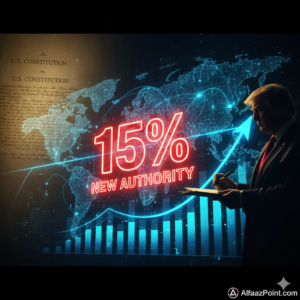
📈 The New Decree: 15% Tariff Under New Authority
Under this new authority, Trump didn’t just reinstate the old 10% tax—he raised it.
-
The New Rate: A flat 15% duty on almost all foreign goods entering the USA.
-
Effective Date: This order is set to take effect on Tuesday, February 24, 2026.
-
The Strategy: By using Section 122, Trump forces Congress to either support him or face the economic consequences of a trade battle within the next 150 days.
🌍 Global Repercussions: Europe and China on Edge
The world has reacted with shock. The European Union is already discussing retaliatory taxes on American tech and luxury goods. China has called the move “protectionist,” while economists warn that American consumers could see prices for electronics and cars jump by 10-20% almost overnight.
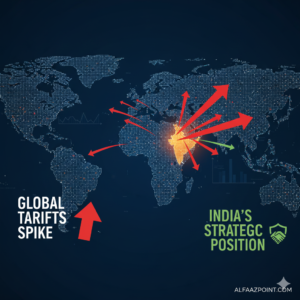
🇮🇳 India’s Strategic Position: A Balancing Act
For India, the situation is delicate. While the 15% tax is a “global” blanket, India is in a unique position:
-
Modi-Trump Synergy: High-level talks between PM Narendra Modi and President Trump suggest that India might negotiate a special exemption for key sectors like Pharmaceuticals and Textiles.
-
Make in India Advantage: As global supply chains shift away from countries facing higher U.S. friction, India could emerge as a preferred manufacturing hub for American companies.
-
Export Impact: However, if no deal is reached, Indian IT and manufacturing sectors could face a significant increase in operational costs.