
Global Economy: Navigating Market Fluctuations & Inflation Trends
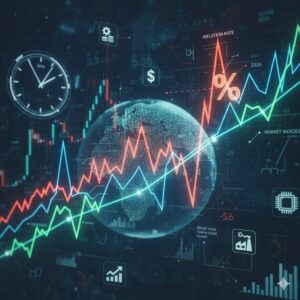
The global economic landscape in 2026 remains a complex puzzle. As nations transition from the volatility of the early 2020s, a “New Normal” is emerging—one defined by rapid technological shifts, climate-driven market adjustments, and a delicate balancing act by central banks.
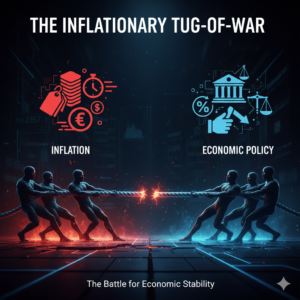
The Inflationary Tug-of-War
While the hyper-inflation of previous years has cooled in many regions, sticky inflation remains a primary concern.
-
Supply Chain Resilience: Markets are no longer just looking for the “cheapest” route, but the “safest.” This shift toward friend-shoring and local production is keeping structural costs higher than the pre-pandemic era.
-
Wage-Price Dynamics: In developed economies, tight labor markets continue to put upward pressure on service-sector prices, making the “last mile” of inflation targets difficult to reach.
Fluctuations: The Volatility DriMarketvers
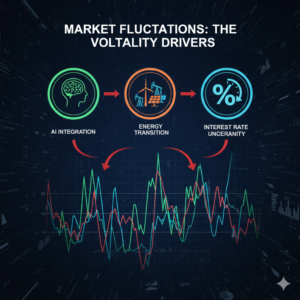
Investors are currently facing a high-variance environment driven by three major factors:
-
AI Integration: Markets are aggressively pricing in the productivity gains from Artificial Intelligence. However, this creates “tech-heavy” volatility as investors react to every breakthrough or regulatory hurdle.
-
Energy Transition: The shift toward green energy is causing fluctuations in traditional commodity markets. As fossil fuel investments plateau and renewables scale up, energy prices remain sensitive to geopolitical shifts.
-
Interest Rate Uncertainty: The “Higher for Longer” mantra from central banks like the Fed and the ECB has made markets hypersensitive to monthly data releases, leading to sharp short-term swings.
Regional Outlooks
| Region | Status | Key Trend |
| United States | Cautious Growth | Balancing soft-landing hopes with high consumer debt. |
| Eurozone | Recovery Mode | Managing energy costs while integrating green industrial policies. |
| Emerging Markets | High Potential | Benefit from supply chain diversification but face debt-servicing pressures. |
| East Asia | Tech-Driven | Leading in manufacturing automation but facing demographic headwinds. |
Strategic Takeaways for 2026

To maintain stability in this environment, a dual approach is necessary:
- Diversification: Beyond traditional stocks and bonds, moving toward “real assets” and inflation-protected securities.
- Agility: Businesses must prioritize liquidity to navigate sudden market corrections or sudden shifts in consumer sentiment.