
Science & Tech: NASA’s Artemis Program – Humanity’s Giant Leap Back to the Moon
KENNEDY SPACE CENTER, FLORIDA — NASA is officially back on the path to the Moon. Through the Artemis Program, the United States is leading an international effort to not only return humans to the lunar surface but to stay there. This mission serves as the ultimate “proving ground” for the most ambitious goal in human history: sending the first astronauts to Mars.
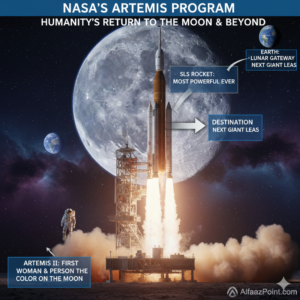
🌒 Artemis II: The Historic Crewed Flyby
The spotlight is currently on Artemis II, the first mission in over 50 years to carry a crew toward the Moon.
-
The Crew: Four pioneering astronauts—Reid Wiseman, Victor Glover, Christina Koch, and Jeremy Hansen (CSA)—are set to fly around the Moon’s far side.
-
The Mission: A 10-day journey that will test the Orion spacecraft’s life-support systems in deep space.
-
Latest Status: Following a successful fueling test in mid-February, NASA is currently troubleshooting a minor helium-flow issue in the SLS rocket. While a March 6 launch was the target, engineers are working around the clock to ensure the vehicle is flight-ready for the next available window.
🛠️ Technology Behind the Mission
-
Space Launch System (SLS): The world’s most powerful rocket, designed to exert 8.8 million pounds of thrust to break Earth’s gravity.
-
Lunar Gateway: A small space station that will orbit the Moon, acting as a communication hub and a “stepping stone” for landing missions.
-
Lunar South Pole: Artemis III (slated for 2027-2028) aims to land the first woman and first person of color near the Moon’s South Pole to search for water ice.
🪐 Why the Moon?
The Moon is a 4.5-billion-year-old time capsule. By establishing the Artemis Base Camp, NASA will learn how to harvest lunar resources (like oxygen and water) and build sustainable habitats. Everything learned on the Moon will be applied to the 7-month journey to the Red Planet, Mars.