Global Crisis 2026: Iran-US Tensions, Crude Oil Surge, and Natural Disasters Shaking the World
The global landscape has witnessed a series of high-stakes developments over the last 24 hours, pushing geopolitical and economic stability to the brink. From escalating military tensions in West Asia to a humanitarian crisis in South Asia, here are the top five international stories you need to know today.
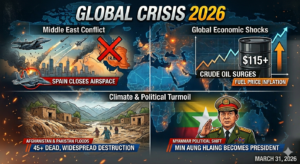
Major global events of March 31, 2026: Geopolitical tensions and natural disasters.
Iran-US Conflict: Spain Closes Airspace to US Military
In a significant diplomatic move, the Spanish government has officially closed its airspace to all United States military aircraft engaged in operations against Iran.
The Reason: Madrid stated its intention to remain neutral and avoid involvement sein a regional war. This decision is expected to create friction within NATO.
The Spark: Iran has confirmed the death of Revolutionary Guards Navy Commander Alireza Tangsiri in a recent strike, leading to threats of severe retaliation from Tehran.
South Asia: Flash Floods Claim 45+ Lives in Afghanistan and Pakistan
Nature’s fury has struck Afghanistan and Pakistan, as relentless rainfall triggered massive flash floods and landslides.
The Damage: Over 45 people have been confirmed dead, with thousands of homes destroyed.
Rescue Efforts: International aid agencies are struggling to reach remote areas as destroyed infrastructure and ongoing mudslides hamper relief operations.
Global Economy: Brent Crude Oil Surges Past $115
The escalating conflict in the Middle East has sent shockwaves through the energy market. Brent Crude Oil prices have skyrocketed to $115.30 per barrel, the highest in recent months.
Impact: Market analysts warn that if the Strait of Hormuz experiences any blockades, fuel prices and global inflation could hit record highs by next month.
Myanmar: Senior General Min Aung Hlaing Nominated as President
In a major political shift, Myanmar’s military junta chief, Min Aung Hlaing, has been nominated as the country’s President.
Analysis: While the military describes this as a transition toward formal governance, international observers view it as a strategic move to legitimize military rule under a civilian facade.
UN Report: Global Outcry Over ‘Obstetric Violence’ in Eastern Europe
A harrowing report released by the United Nations has exposed widespread ‘Obstetric Violence’ and mistreatment of women within healthcare systems in Eastern Europe and Central Asia. The UN has called for immediate systemic reforms to ensure the protection of women’s human rights in maternity hospitals.
Editorial Outlook: A Precarious Week Ahead
Geopolitical experts suggest that 2026 is becoming a defining year for global stability. The convergence of energy crises, climate-driven disasters, and military brinkmanship suggests that the next 48 hours will be critical for international diplomacy and the global stock markets.